Thursday 26th March
Kyoto
Kyoto City Tour - Full Day - Includes lunch
Our guide was Michi, a delightful lady with a subtle sense of humour. The arrangement was to meet her in the hotel lobby at 9:00, and she was waiting for us when we went down just after 8:50.
Our first destination was the Fushimi Inari Taisha Shrine grounds. A one-stop subway journey followed by 'Keihan Main Line' to Fushimi-Inari station. A short walk took us to the Torii gate entrance at Kumanosha and the start of the walk round the extensive grounds, through tunnels of Torii gates. The gates are made of wood and painted in a red paint to protect against moisture and rot.
There are lots of statues of foxes; we mistakenly thought these were squirrels when going round a shrine in Fukuoka. Michi explained that the reason for the foxes is that agriculture in Japan depended on rice, and mice like rice. Foxes like mice, so were encouraged and revered.


A lot of the fox statues have red bibs around their necks; again Michi explains that red is a protective sacred colour, but also the bibs are protectors of travellers and children.
Back to the station. Whilst waiting for the train Michi asks if we have any preference for lunch, and suggests a good sushi bar, but is doubtful if we could get a reservation. Nevertheless she calls the restaurant and is jubilant that she gets the reservation. Another short rail journey heading back to Schichijo station and a short walk to the Buddist Sanjusangen-do temple. It was established in 1164, although the original temple building was destroyed by fire and reconstructed in 1266. Since then it has remained unchanged for 700 years, although there have been four renovations. Measuring 120 metres, the temple hall is Japan's longest wooden structure. The name "Sanjusangen-do" literally means 33 'intervals' and refers to the number of intervals between columns (a traditional Japanese method of measuring the size of a building. In the centre of the building is a large, wooden statue of 'Senju-Kannon', flanked on either side by 500 human-sized Kannon, standing in ten rows - an amazing sight. Before revealing that there were 1,000 statues Michi asked us to guess how many we thought there were. I was wildly out guessing between 6,000 and 10,000 such was the impression they made on me. We weren't allowed to take photos inside the temple, but it was really impressive.


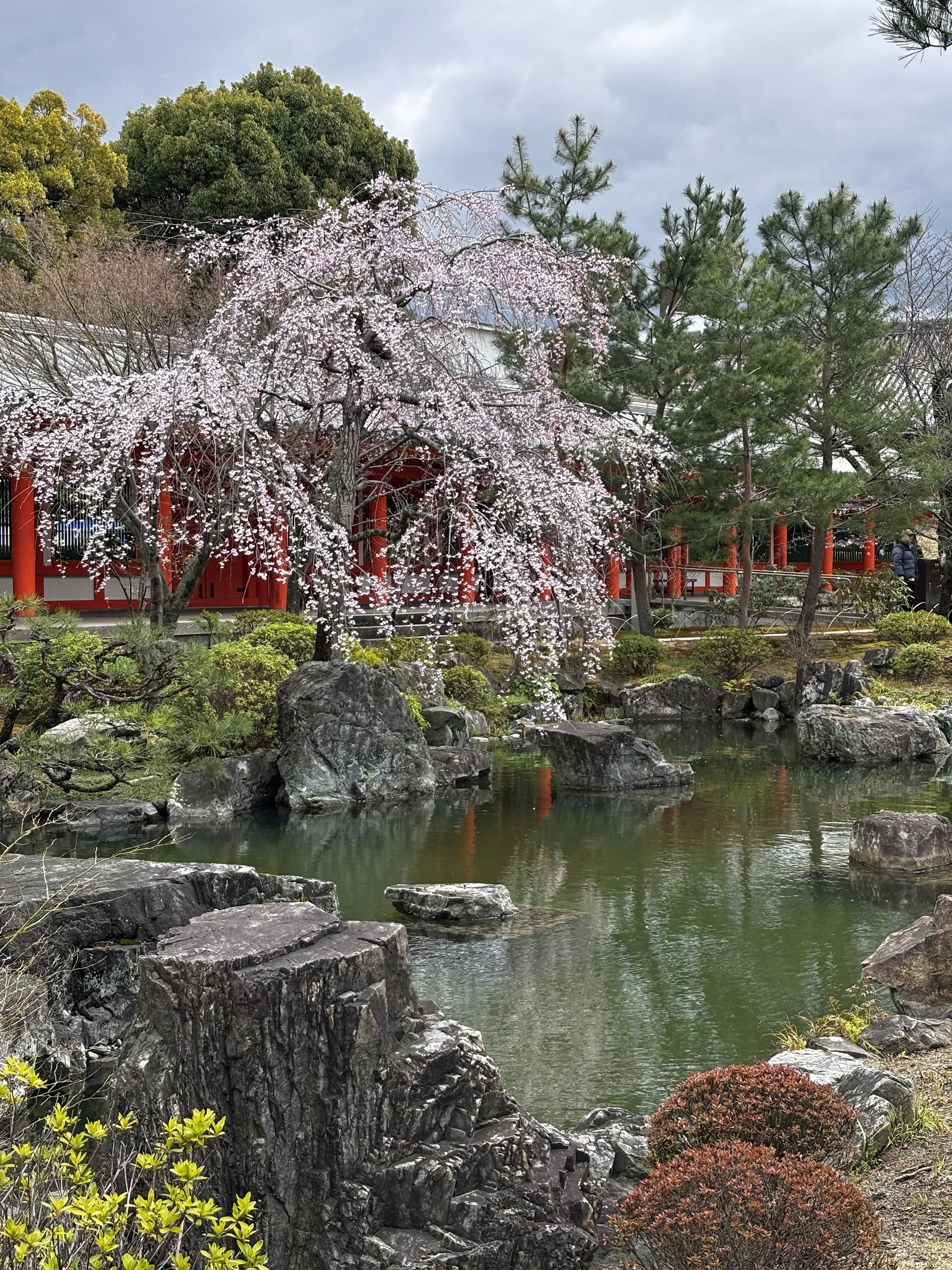


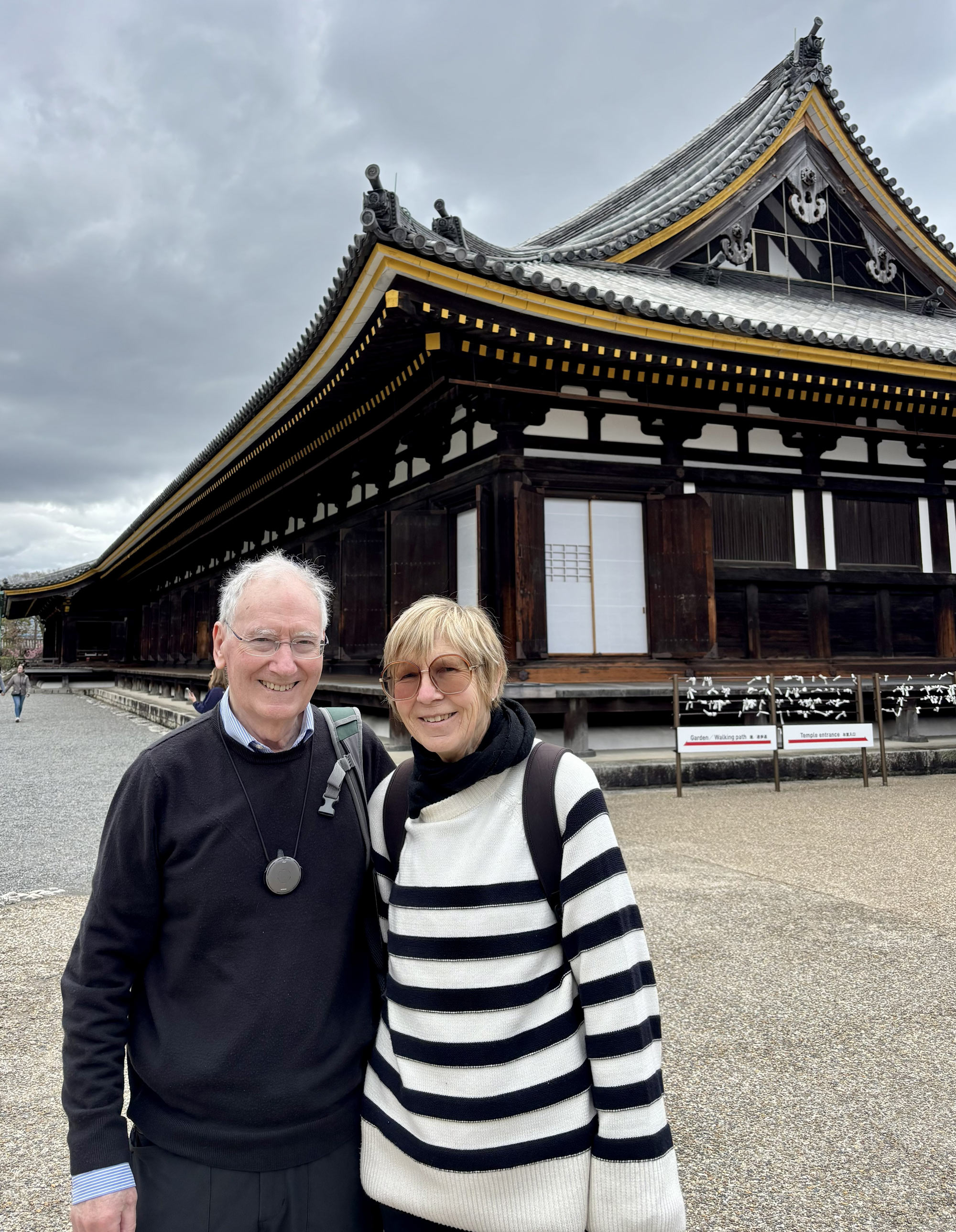
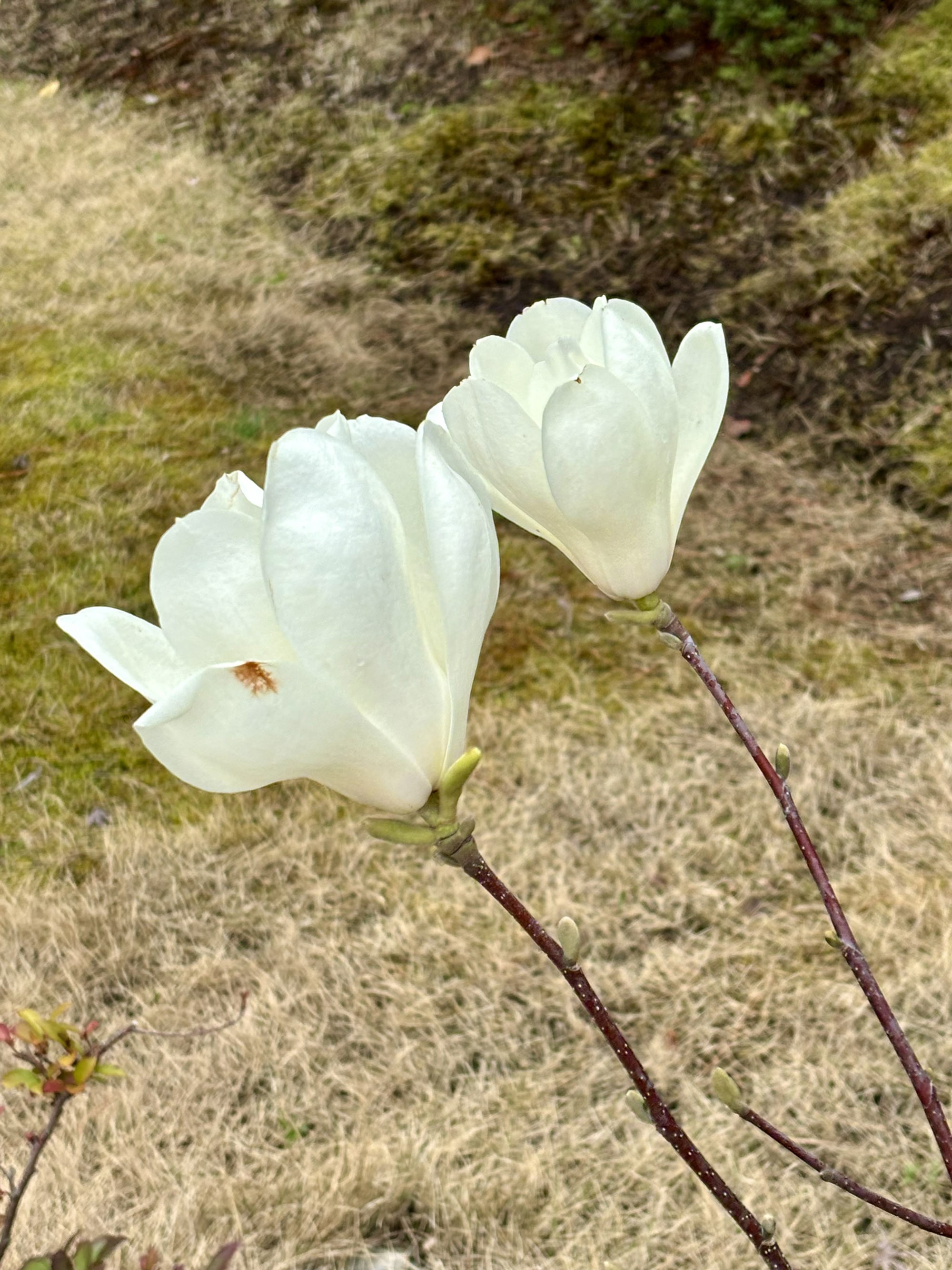
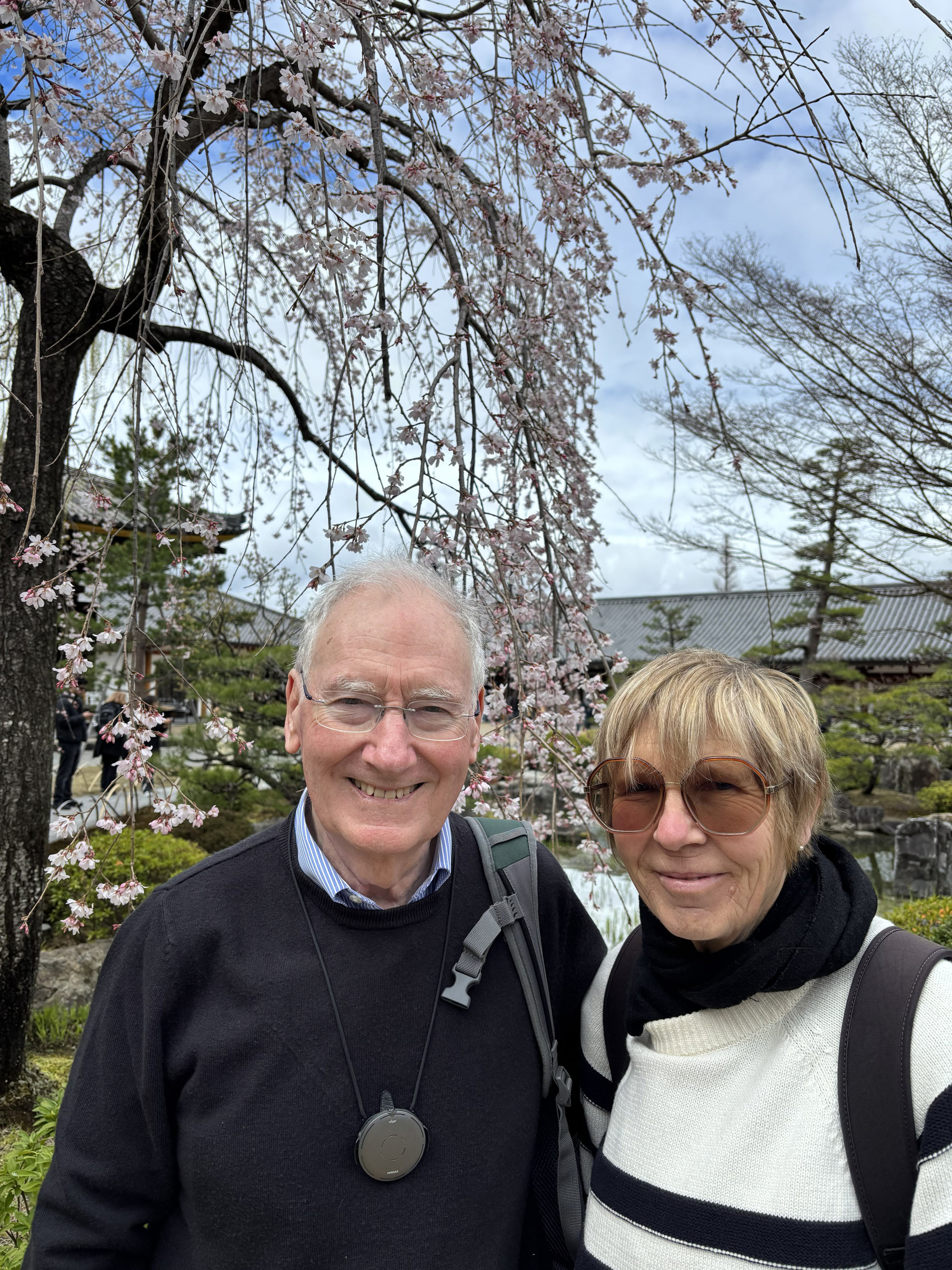


A wander round the grounds, taking in the now more abundant cherry blossom, before heading off for lunch. Like most sushi bars we've visited it is fairly small, seating no more than about 9 people - with a constant flow of potential customers popping in to see if there were any 'tables', despite that sign outside that said they were fully booked for today. I think we were lucky. The food is delicious. Norri, from our food tour in Fukuoka taught us there were only two words we needed, arigato (thank you) and oishi (delicious). He was right, saying 'oishi' seems to really hit home. (I almost wonder if it has a second meaning!)


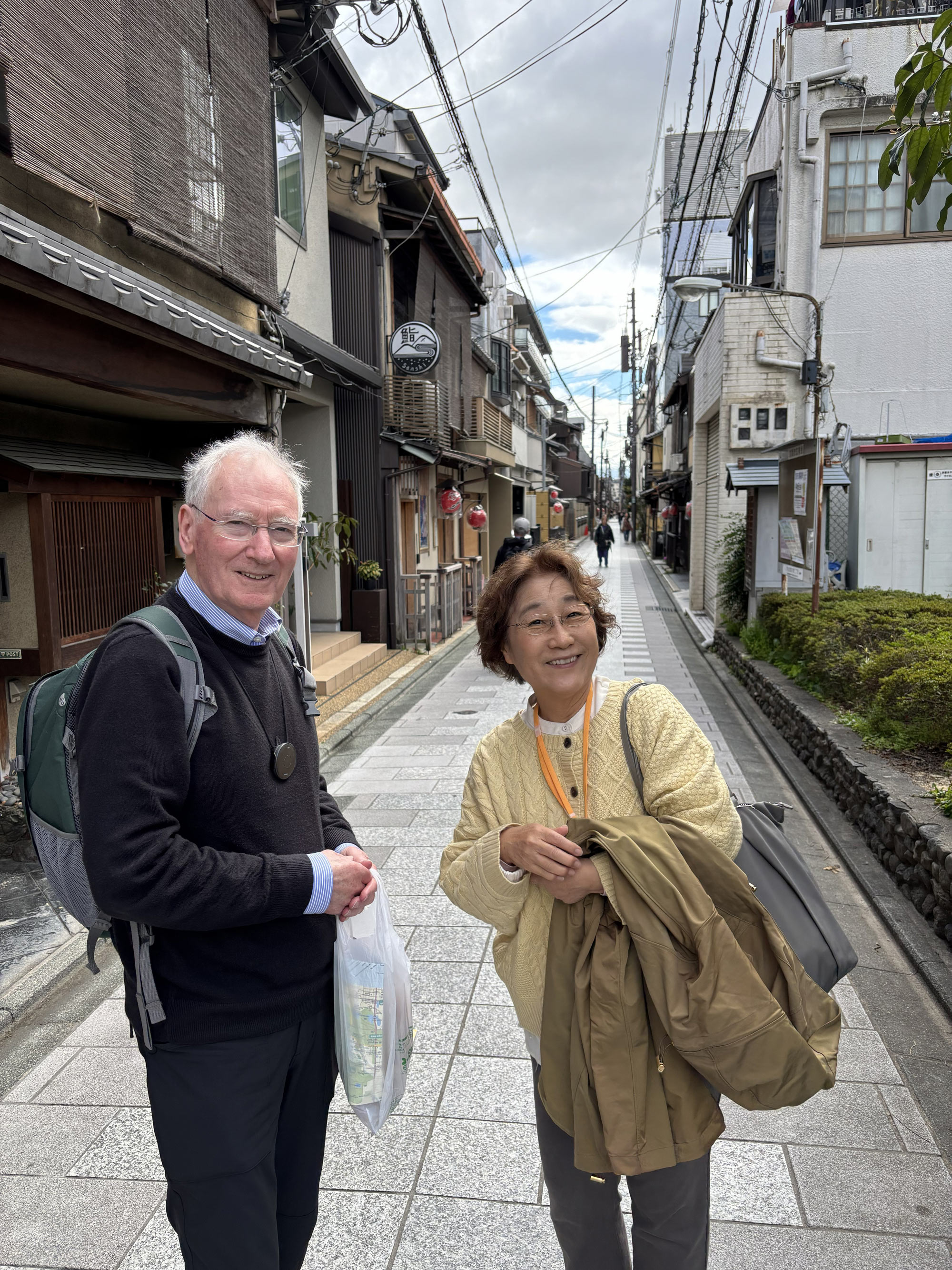
After lunch we visit Kiyomizu-dera Temple, a Buddhist temple, built into the side of a hill. There are several pagoda in the grounds, which we look around, including walking up to the main 'stage' of the temple.


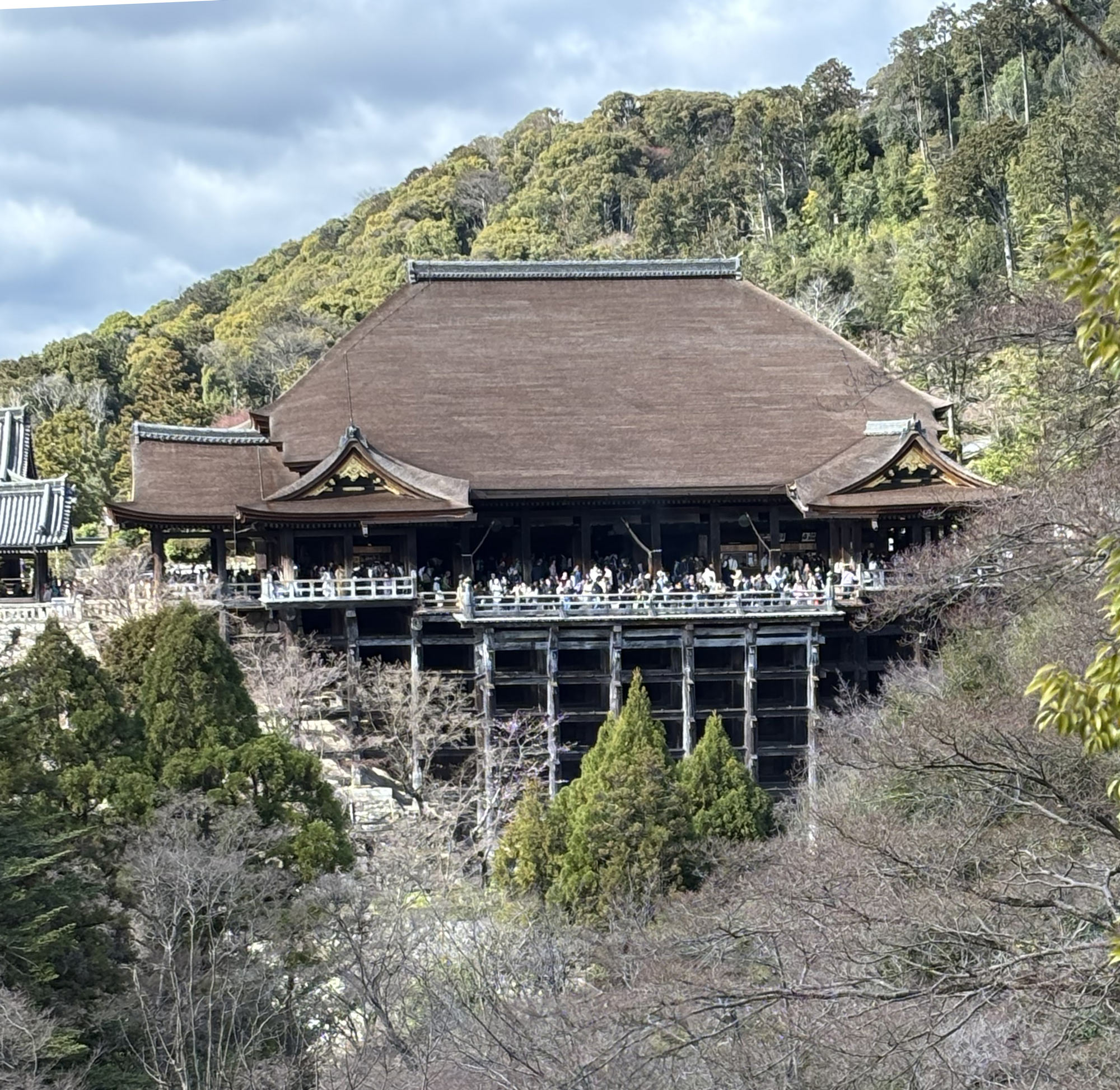


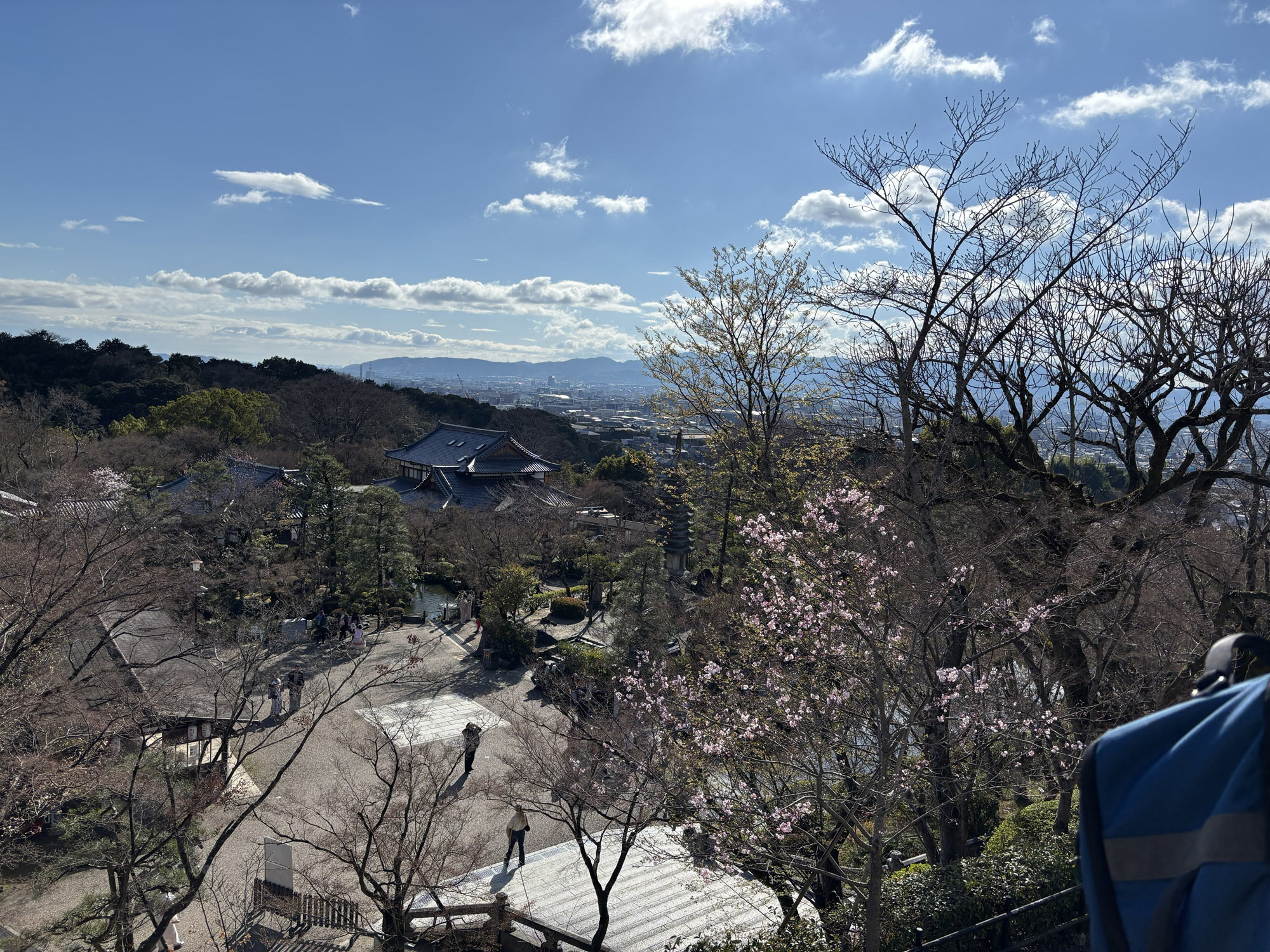

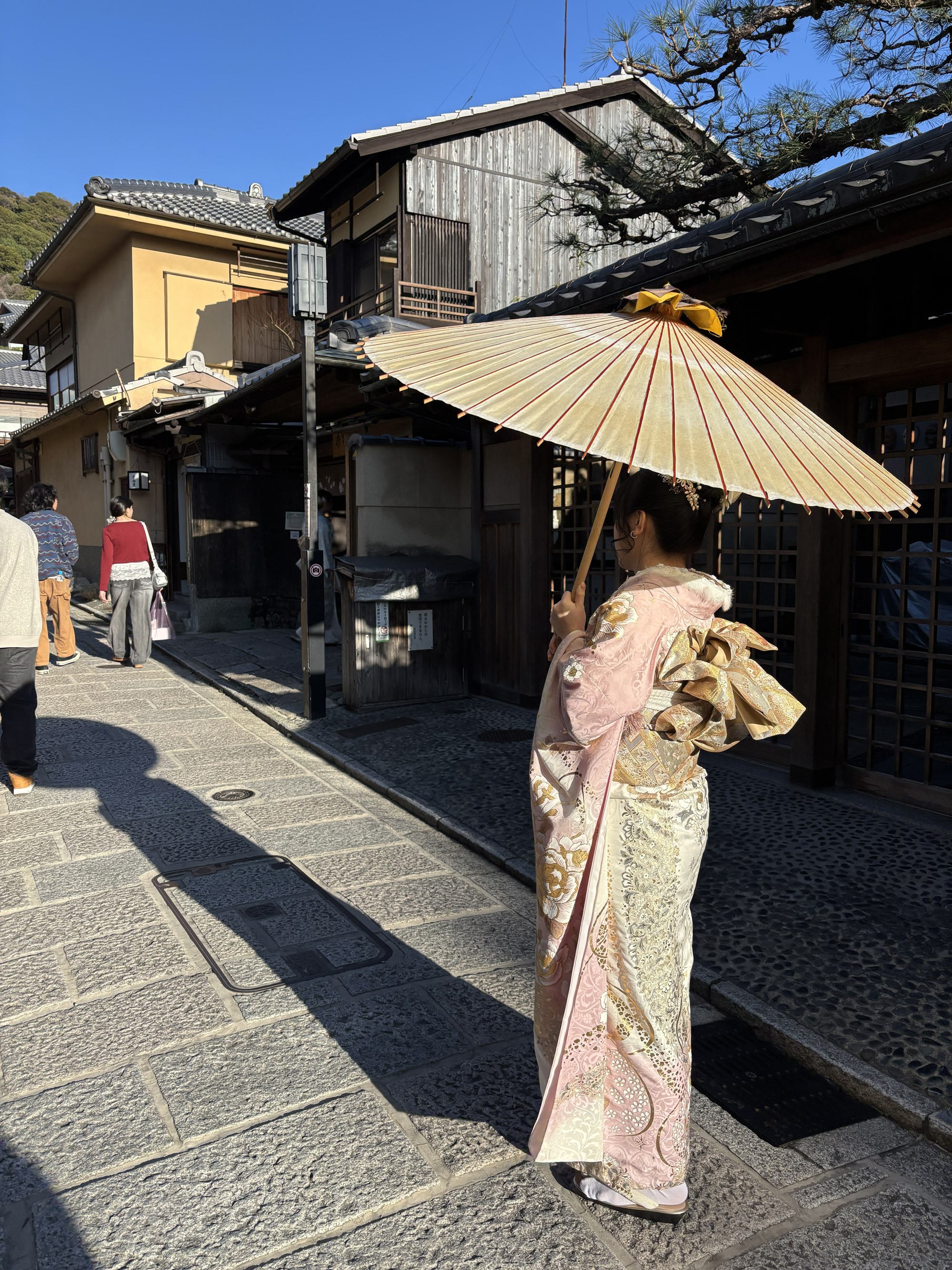


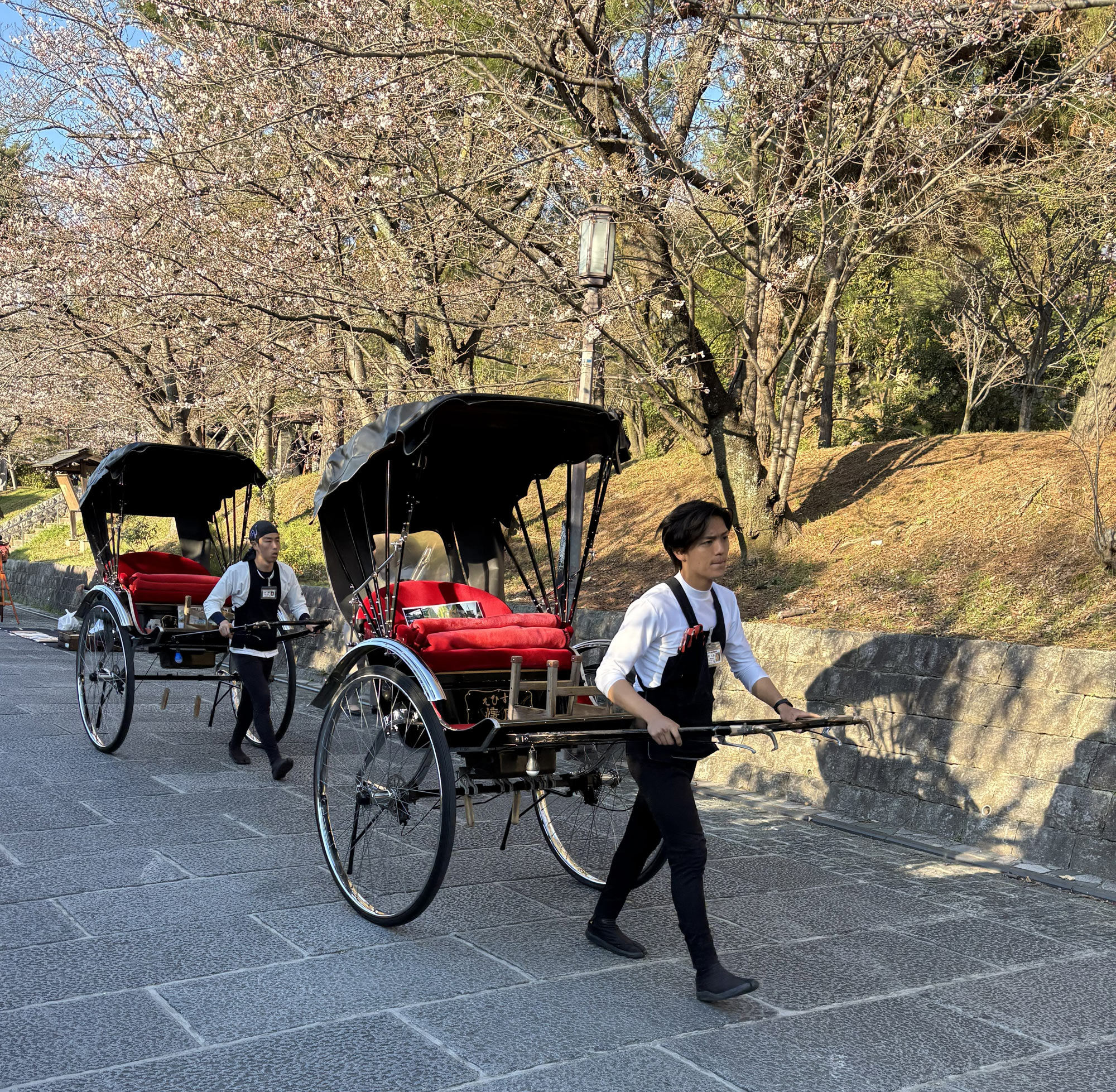
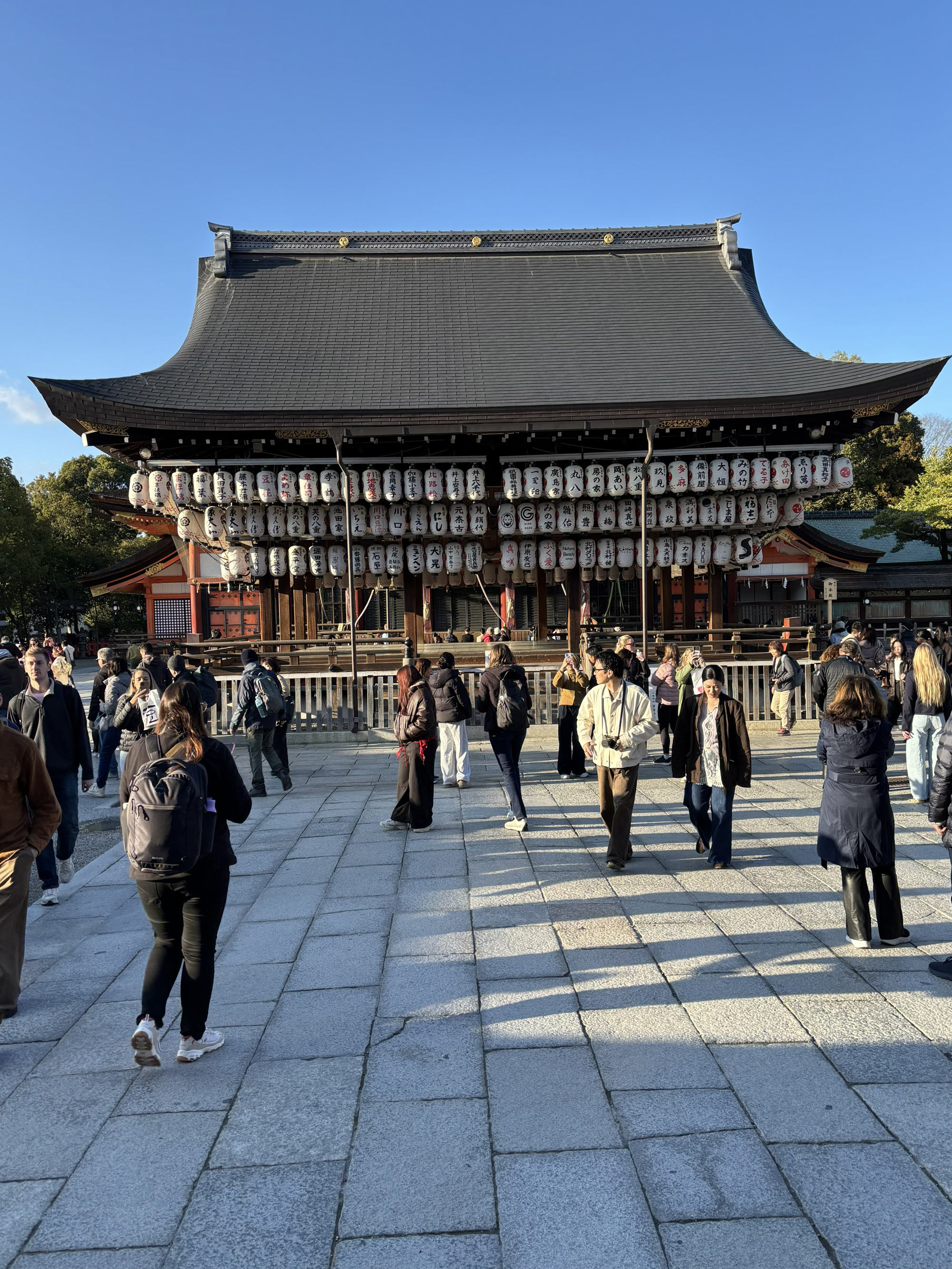


We then walked down hill through old streets lined with tourist type shops, and after a fascinating day with Michi we part company. It's probably around 5:00pm and she has to catch a train back to Nara - another long day for one of our guides. At this point I was surprised to find that we were back within a relatively short walk of our hotel. I now realise that the name of the hotel, Higashiyama, is also the name of this ancient district of Kyoto, and, to quote the Japanese Tourist Board
"Higashiyama is a historic, scenic district in eastern Kyoto, Japan, renowned for its well-preserved, narrow lanes, traditional wooden machiya townhouses, and iconic temples like Kiyomizu-dera. It offers a quintessential, "old Japan" atmosphere with attractions like Sannenzaka, Ninenzaka, and Gion, making it a must-visit for cultural experiences"
After our lunch of sushi we decide not to eat in the hotel, but to try to find a bar with just a snack. Walking downhill from the hotel we come across Bar 竹葉-ささ, also known as Bar sasa. It's very elegant, but was also quiet, with just us and two other couples. We ordered a cocktail each, plus some olives and, possibly, cheese & biscuits. The cocktails arrived in bowl shaped glasses on stems, with salt encrusted around the rim. But what fascinated me was the 'ice'. It was spherical, but I couldn't make out if it was simply a round ice cube, or was made of glass that had simply been cooled down to a low temperature. The sphere was about 3cm in diameter. When we came to leave I asked the barman what it was. He completely surprised me by saying that he had carved them from ice blocks with an ice pick as we waited for the cocktails to be served. Very impressive. At the time of writing this the bar's website shows him, I believe his name is Eiki Takehara and presume he's the bar owner, sipping wine and looking at a bottle of wine. I really liked the bar, and I also really like the website. Both are elegant and understated.
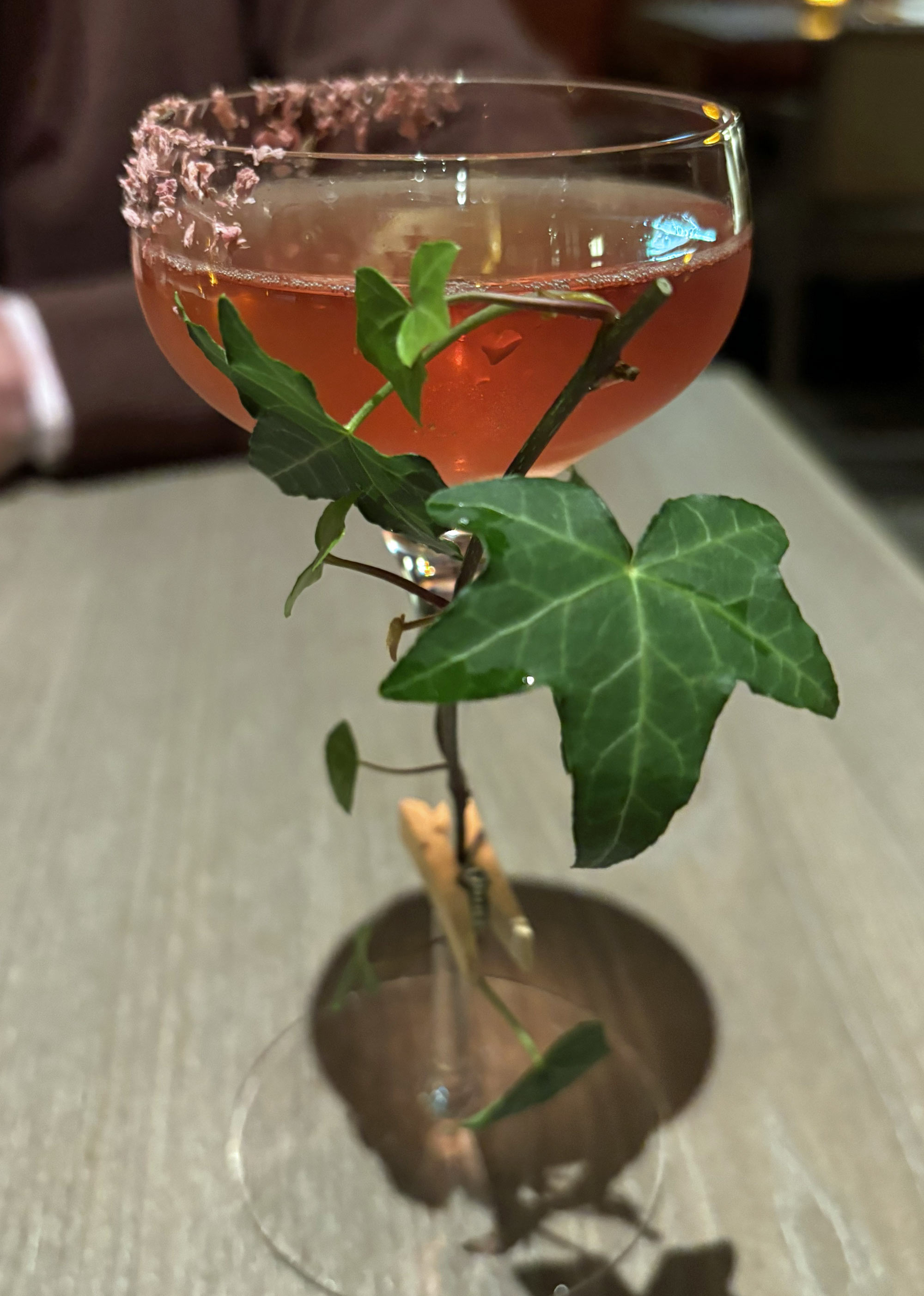
A short walk up the hill to our hotel, and time to flop!